

Reflections on two days with Changing Lives in Wolverhampton, 22–23 October 2026
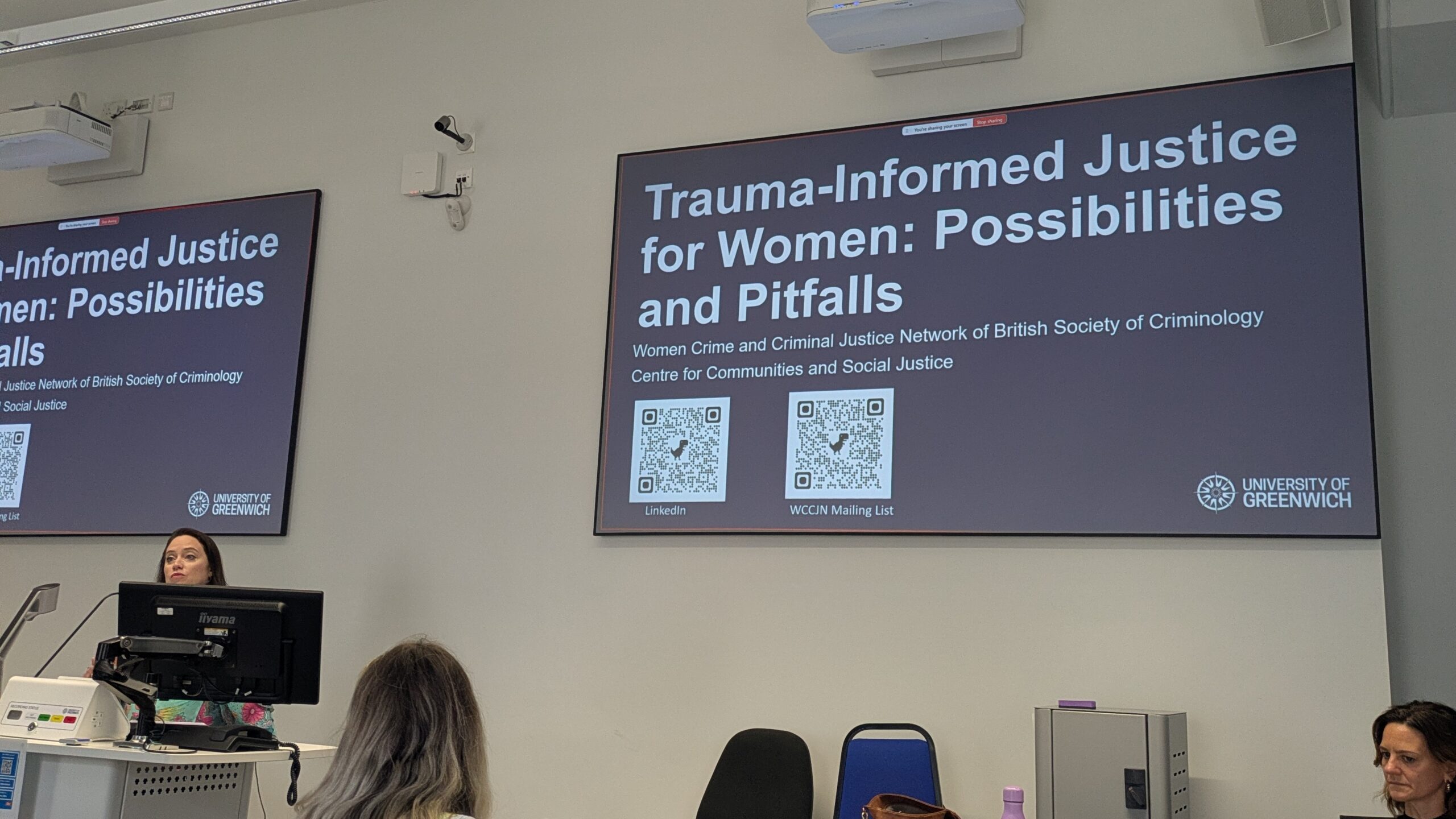
In May, a friend and I, both with lived experience of imprisonment, attended a conference at the University of Greenwich titled Trauma-Informed Justice for Women: Possibilities and Pitfalls. By chance, we found ourselves sitting at a table with Nicola, Service Manager for Criminal Justice in the West Midlands, and Sam, a Specialist Women’s Justice Practitioner working across Wolverhampton and Walsall. We got talking about our experiences of prison, the criminal justice system and the support available to women. Before the day was over, they had invited us to visit Changing Lives in Wolverhampton.
On 22 October, we visited the Changing Lives hub in Wolverhampton. From the moment we stepped inside, the space felt warm, comforting and welcoming. There were comfortable sofas and chairs, plants, creative resources, clothing donations, a lovely kitchen and lounge space. Every detail seemed carefully considered, from the affirmations on the bathroom mirror to the variety of sanitary products available for women to use. Small things, perhaps, but things that communicated something important: someone had thought about the women who would walk through that door, what they might need and how they might feel. I immediately felt safe and welcome.
Our first morning began with one of Changing Lives’ weekly cooking sessions. The women supported by Changing Lives came together to choose ingredients and prepare a meal from scratch, guided by Chef Robinson, a community chef and nutritionist with a real passion for educating people about food and teaching communities how to cook. I joined some of the women in preparing the meal, and what struck me was how quickly we connected through something so ordinary. There was conversation, laughter, sharing tasks and the satisfaction of creating something delicious together. At the end, the women could take food home to enjoy themselves or share with their children.
It made me think about how easily we underestimate the importance of these seemingly simple activities. Cooking together offered more than a practical skill or a nutritious meal. It provided an opportunity to connect with others, to step outside the difficulties and demands of everyday life, to learn something new and to experience the satisfaction of having made something. Nobody was being assessed, judged or expected to disclose anything about themselves. We were simply people cooking together.
During the session, I spent time talking with a peer mentor who had been involved with Changing Lives for some time. She told me about the support she had received, the different courses and opportunities available, and how the organisation had changed her life. What stood out was her description of receiving help in ways that other services had never been able to provide. As she spoke, I found myself reflecting on my own experiences after leaving prison.
I returned to London still deeply affected by my experiences of the criminal justice system. Years spent on bail, the publicity surrounding my case, the shame, the loss of my identity and the experience of imprisonment itself had left me traumatised and deeply distrustful of authority. I had learned early on in prison that being open about how I felt could have consequences. Sharing personal information, expressing distress or asking for help could be interpreted through the language of risk, rather than recognised as a human need. When you have spent time in an environment where vulnerability can be used against you, learning to trust people again is incredibly difficult. I needed support when I came out of prison, but I struggled to find it. I remained under probation supervision, yet much of what I needed had very little to do with managing my risk and everything to do with recovering from what I had experienced.
What I began to see at Changing Lives was something quite different. There was no sense of a one-size-fits-all approach. The support was shaped around the individual woman, her experiences, circumstances and needs, rather than an assumption that everyone who has encountered the criminal justice system requires the same kind of help. Importantly, the relationships I witnessed did not seem to carry the same associations of monitoring, punishment and authority that can make it so difficult for women to engage with services connected to the criminal justice system.
For some women, this might mean accessing courses, developing skills, finding opportunities or receiving practical assistance. For others, it might simply mean having somewhere safe to go, a friendly face, a hot drink and someone who genuinely cares enough to listen, or somewhere to spend a few hours when life feels particularly difficult. Some women come and go. Some are not ready to engage, or their circumstances make consistent engagement difficult. But the door remains open, and they know they will always be welcomed without scrutiny or judgement. For others, Changing Lives has become a much-needed source of stability, consistency and kindness in lives where those things have too often been absent.
The organisation’s work extends beyond women who have been exposed to the criminal justice system. Its services include early intervention, alongside specialist support for women involved in sex work or experiencing sexual exploitation. Through its courses, activities and wider provision, women can develop new skills, build confidence, access opportunities and find encouragement from people who recognise them as individuals rather than defining them by their circumstances.
That afternoon, we sat down with members of the team to talk about our experiences and theirs. I was struck by how deeply they understood the degradation that women can experience within the criminal justice system. We spoke about the loss of self-esteem, the consequences of being repeatedly judged or dismissed, and what happens when people who have already experienced significant trauma encounter systems that fail to recognise or respond to it. Many of the women they work with have been let down repeatedly, sometimes by the people closest to them, and sometimes by the very services intended to protect or assist them. Their circumstances cannot be understood in isolation from the abuse, disadvantage, poverty, trauma and institutional failures that may have shaped their lives.
What I found particularly moving was learning that some of the staff had experienced significant adversity themselves. Between them, they brought a remarkable wealth of life experience, understanding and wisdom to their work. There was no obvious hierarchy in the conversations we had, no sense that one person’s experiences or knowledge mattered more than another’s. Lived experience was not treated as something that diminished a person’s credibility, but as something that could contribute meaningfully to their ability to understand and connect with others. It reminded me how much can be achieved when people feel understood rather than judged.
The following day, we visited an animal farm with some of the women. It was another opportunity to spend time together outside the usual routines of daily life, surrounded by animals and nature. There was something deeply therapeutic about it, but what stayed with me most were the conversations. Over the course of the day, several women generously shared parts of their lives with me. I felt privileged that they trusted me enough to do so, particularly when some of those experiences were deeply personal and painful. Their willingness to speak so openly also helped me reflect on aspects of my own trauma that I am still trying to make sense of.
It reminded me of the women I met in prison. I remember hearing stories of experiences so distressing and difficult that I struggled to comprehend how anyone could have endured them. Yet the women telling those stories were often among the bravest, most compassionate and resilient people I had ever met. I felt much the same in Wolverhampton. Here were women who had faced immense challenges, yet continued to show up, to try, to support one another and to find reasons to be hopeful about their futures. Their experiences, circumstances and needs were different, but what brought them together was a shared sense of connection, understanding and solidarity.
I have often thought that one of the most damaging aspects of imprisonment is the way it strips people of their individuality. In prison, it can feel as though everything about you is reduced to the fact that you have committed an offence. Your past, your relationships, your achievements, your personality and the person you were before imprisonment seem to carry little weight. You become a prisoner, a number, a risk to be managed. The assumption is that you have done something wrong, and therefore the way you are treated is somehow justified. Yet the women I met inside were never simply the offences for which they had been imprisoned. Whatever had brought them into the criminal justice system, they remained individuals with histories, relationships, responsibilities and qualities that deserved to be recognised. They were mothers, daughters, friends, professionals, carers and women with remarkable talents, intelligence, compassion and strength.
I saw that same humanity at Changing Lives, both among the women receiving support and those providing it. What made the experience particularly meaningful was that nobody appeared to have to prove themselves worthy of being treated well. Women were not expected to have overcome every difficulty, made all the right decisions or reached a particular point in their lives before being shown patience, understanding and respect. There was a recognition that people’s circumstances are rarely straightforward, and that treating someone with dignity should never be conditional on their progress.
We talk a great deal about trauma-informed practice, particularly in discussions about women’s experiences of the criminal justice system. But there is an enormous difference between describing an approach as trauma-informed and creating an environment in which people genuinely feel safe, respected and understood. Over those two days, I saw what that looks like in practice. It was in the careful consideration given to the physical environment, the patience of staff who understood that trust takes time, the cooking sessions, the shared meals, the opportunities to learn and the space to simply be with other people. It was in recognising that a woman might not be ready to engage today, but that she should still feel welcome tomorrow.
Kindness has become a word we use so frequently that I sometimes wonder whether we have lost sight of how powerful it can be. It can sound like something small, yet for someone who has experienced years of judgement, rejection, or institutional indifference, being treated with genuine kindness can be profoundly significant. That does not mean kindness alone can resolve the structural inequalities, trauma or practical difficulties that women face. But consistent, compassionate support can create the conditions in which women begin to feel safe enough to trust, to seek help and to imagine different possibilities for their lives. That is no small thing.
What stayed with me was that almost every woman I spoke to described Changing Lives as having done exactly what its name promises. In different ways, and at different stages of their lives, it had changed their lives.
Even as a visitor, I felt a sense of belonging and support that I have rarely experienced since leaving prison. In fact, it was one of the few places outside prison where I have felt that same sense of solidarity and understanding. It reminded me of the relationships I had known among women inside, where despite the conditions in which we found ourselves, we often became one another’s greatest source of comfort and strength. I couldn’t help thinking how much I would have benefited from somewhere like Changing Lives when I was released. At a time when I was struggling to trust people, make sense of what I had experienced and rebuild my confidence, having access to such a place could have made an enormous difference.
There is something profoundly powerful about women supporting other women, particularly when that understanding comes from shared experiences of adversity, judgement or exclusion. Before visiting Wolverhampton, I had not realised that support of this kind existed in quite this way. Having experienced the gaps in provision myself, I found it both encouraging and frustrating to see what was possible. Encouraging because I could see the difference it was making. Frustrating because I kept thinking about how many other women, in other parts of the country, could benefit from the same approach.
As Nicola explained, there is the potential to replicate more of this work elsewhere, if only the resources were available. It seems extraordinary that we can find the money to imprison women, supervise them, monitor them and manage their perceived risks, yet so often struggle to fund the relationships, spaces and opportunities that might help them rebuild their lives.
I left Wolverhampton feeling something I had not expected: a renewed faith in humanity. In a world that can feel deeply isolating for women who have experienced the criminal justice system, knowing that there are people who will stand alongside them, recognise their potential and refuse to give up on them can make all the difference. What I witnessed was not simply a service being delivered, but a community of people who genuinely believed in one another.
I am enormously grateful to Nicola, Sam, the entire Changing Lives team and, of course, the women who welcomed us so generously and shared their time and experiences. I would encourage anyone working in criminal justice, women’s services, policy or prison reform to learn more about Changing Lives and, if the opportunity arises, to see its work for themselves.